
Aged Care Support at Home

You want support with dignity

When someone you love starts needing more support at home, it rarely feels straightforward.
You may be balancing work, family, and growing concern — while navigating unfamiliar systems, long wait times, and confusing terminology.
You want to get this right.
But you don’t have the time, energy, or headspace to manage it alone.
That’s where Simplified Aged Care Solutions steps in.
Starting the Aged Care Journey - with Clarity
Accessing Commonwealth-funded aged care services begins with an ACAT assessment.
From there, families often need guidance to establish and optimise a Support at Home package with an approved provider.
We support individuals, spouses, and adult children from the very beginning, including:
Guidance and assistance with ACAT applications
Preparation and coaching before the ACAT assessment
Advocacy during the assessment process
Establishing Support at Home packages with reputable providers
Ensuring services truly reflect the person’s changing needs
But for many of our clients, advice alone isn’t enough.
They need someone to step in and take responsibility for coordinating it all.
Our Case Management Service
For families who are stretched, overwhelmed,
or simply need capable support.
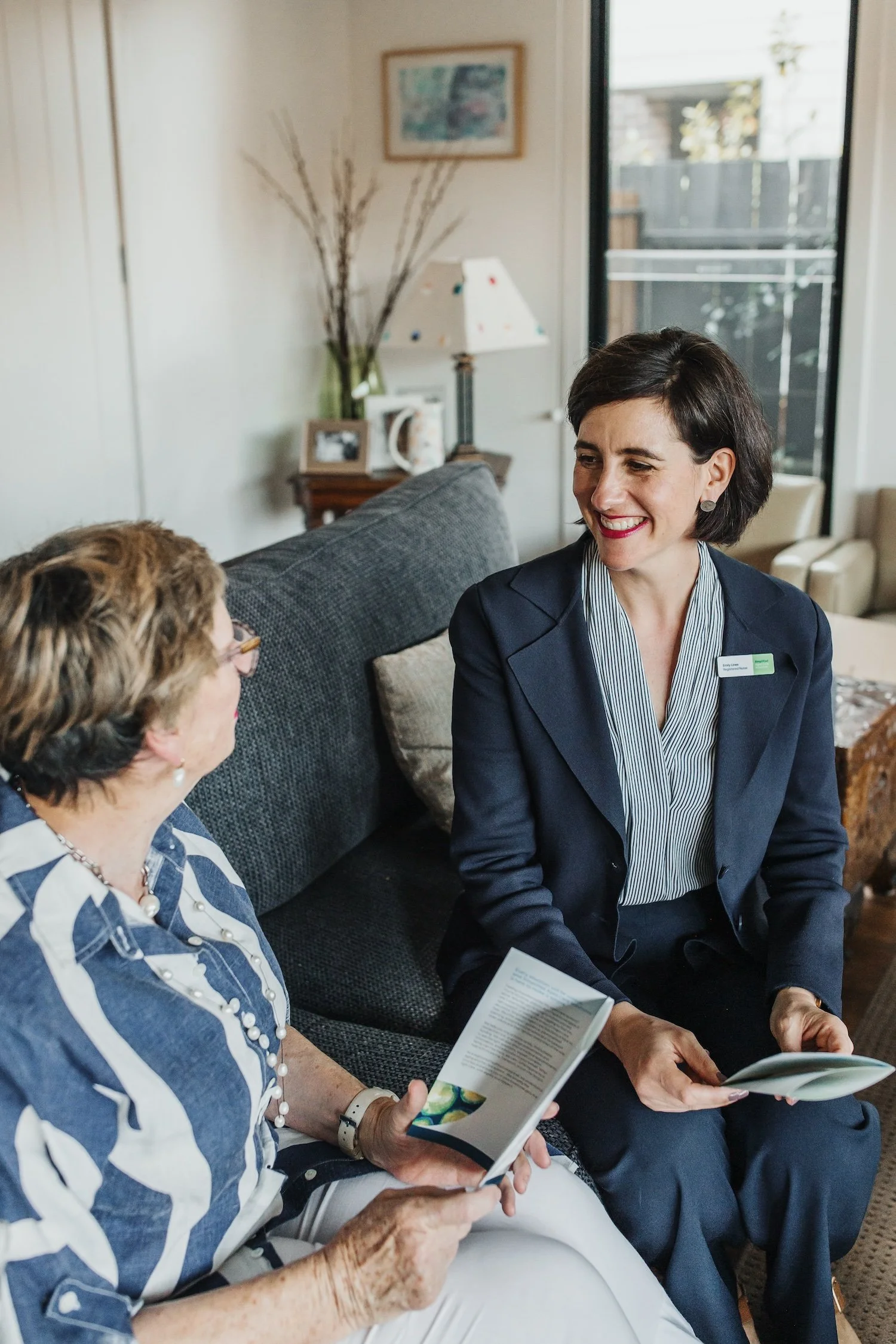
Some of our clients are professionals balancing careers and young families. Others are spouses trying to manage rapid health changes while exhausted and emotionally depleted. Some live interstate and are coordinating everything remotely.
Our Case Management Service is designed to remove both the practical and mental load.
We manage the phone calls, referrals, provider communication, and follow-ups — ensuring the right services are in place and working as they should.
This may include:
Attending and advocating during ACAT assessments
Supporting initial meetings with Support at Home providers
Reviewing care plans to ensure funding is being fully utilised
Liaising directly with providers to resolve delays or concerns
Attending hospital discharge planning meetings
Supporting communication with GPs and specialists
Assisting with exploring retirement or supported living options if needed
You remain informed and involved — but you’re no longer carrying everything alone.
The outcome - a clear plan. appropriate supports in place, funding optimised, reduced stress and second-guessing and peace of mind knowing someone experienced is overseeing the details.
Most importantly, the person you care about is supported and safely home - you are supported too.
Let’s bring clarity to your next steps
If you’d like guidance, coordination, or simply reassurance that you’re on the right path with Support at Home, book a free call to talk through your situation and the support available.
Frequently Asked Questions
-
ACAT assessments are prioritised based on urgency. The timeframe depends on the information provided at referral and how significant the person’s needs are.
If circumstances change — for example, there is a noticeable decline in mobility, memory, safety, or ability to manage daily tasks — the assessment may be re-triaged as more urgent.
To request this, contact My Aged Care and provide the reference number (or the person’s Medicare details and date of birth). Clearly explain what has changed and why the situation now requires urgent review.
The key is being specific about the decline — what the person can no longer safely do independently.
-
An ACAT assessment is the first step to access government-funded aged care services. An independent assessor meets with the person (usually at home or in hospital) to understand their health, daily functioning, and support needs.
Based on this conversation, they determine eligibility for services such as home support, Support at Home packages, respite, or residential aged care.
To prepare, have an open conversation beforehand. With your loved one’s permission, be ready to speak honestly about the support they need — especially on their more difficult days. Many people downplay their struggles out of pride, which can lead to lower levels of support being approved.
Clear, honest information helps ensure the assessment reflects their true needs and the right level of care is put in place.
-
After the ACAT assessment, if your loved one is approved for Support at Home funding, they will be assigned a priority level: Standard, Medium, High, or Urgent.
Wait times vary depending on urgency, but current averages are approximately:
Standard: 10–11 months
Medium: 8–9 months
High: 1.5–2.5 months
Urgent: Within 1 month
If circumstances change while you’re waiting, it’s important to contact My Aged Care and request a review, as funding priority can be reassessed based on new information.
-
Most people want to remain in their own home for as long as possible — surrounded by familiarity and independence.
Staying at home safely usually means putting the right supports in place early. This may include:
Home modifications (such as rails or ramps)
Help with meals, cleaning, or personal care
Medication support
Regular medical reviews
Relying solely on family can quickly become overwhelming and unsustainable. The key is adjusting support as needs change — increasing services during periods of decline or illness, and reviewing care regularly to ensure funding is being used effectively.
With the right coordination and proactive planning, many families can extend safe, supported living at home for longer than they expect.
By thoughtfully adjusting services — increasing support when recovering from illness, or easing back when less is needed — families can help their loved ones maintain independence, safety, and quality of life at home for as long as possible.